

Article
Why Is My Check Engine Light On?
Few dashboard warnings create more anxiety than the check engine light. While it doesn't always mean your vehicle has a major problem, it should never be ignored. The check engine light is your vehicle's way of letting you know that one or more systems require attention.
Common Causes
The check engine light can beWhy Is My Check Engine Light On?
Few dashboard warnings create more anxiety than the check engine light. While it doesn't always mean your vehicle has a major problem, it should never be ignored. The check engine light is your vehicle's way of telling you that one or more systems require professional attention.
Common Causes
The check engine light can be triggered by many different issues, including:
- A loose or damaged gas cap
- A failing oxygen sensor
- Worn spark plugs or ignition coils
- Catalytic converter problems
- Mass airflow sensor failures
- EVAP system leaks
- Engine misfires
- Emissions-related faults
Without proper testing, it's impossible to know which issue caused the warning.
Should You Keep Driving?
If the check engine light is steady and your vehicle appears to be running normally, you can often drive a short distance to have it professionally inspected. However, if the light is flashing, safely reduce your speed and have the vehicle inspected as soon as possible. A flashing check engine light often indicates a severe engine misfire that can quickly damage the catalytic converter.
Why Professional Diagnostics Matter
Modern vehicles contain dozens of computers and hundreds of sensors. Simply reading a diagnostic trouble code does not identify the failed part. Professional diagnostics involve testing the affected system, verifying the root cause of the fault, and confirming the correct repair before replacing any components.
How Primary Care Auto Can Help
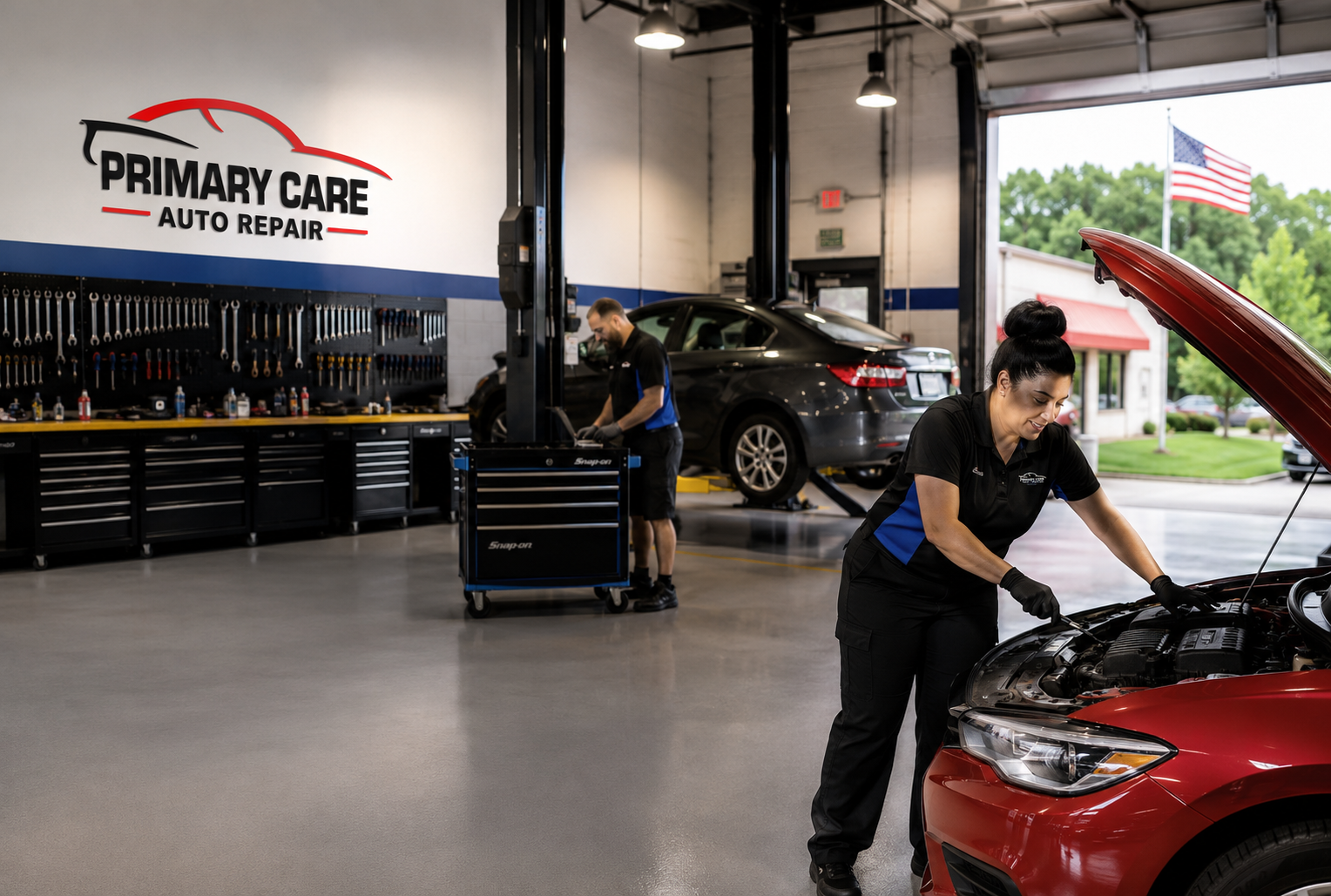
At Primary Care Auto, our certified technicians use professional diagnostic equipment and proven testing procedures to accurately identify the cause of your check engine light. We explain our findings in clear, easy-to-understand language, answer your questions, and advise you on the repairs your vehicle truly needs—so you can make an informed decision with confidence.
triggered by many different issues, including:
• A loose or damaged gas cap
• A failing oxygen sensor
• Worn spark plugs or ignition coils
• Catalytic converter problems
• Mass airflow sensor failures
• EVAP system leaks
• Engine misfires
• Emissions-related faults
Without proper testing, it's impossible to know which issue caused the warning.
Should You Keep Driving?
If the check engine light is steady and your vehicle appears to be running normally, you can often drive a short distance to have it professionally inspected. However, if the light is flashing, safely reduce your speed and have the vehicle inspected as soon as possible. A flashing check engine light often indicates a severe engine misfire that can quickly damage the catalytic converter.
## Why Professional Diagnostics Matter
Modern vehicles contain dozens of computers and hundreds of sensors. Simply reading a fault code does not identify the failed part. Proper diagnostics involve testing the affected system, verifying the cause of the fault, and confirming the correct repair before replacing components.
How Primary Care Auto Can Help
At Primary Care Auto, our certified technicians use professional diagnostic equipment and proven testing procedures to accurately identify the cause of your check engine light. We explain our findings in clear language, answer your questions, and advise you on the repairs your vehicle truly needs so you can make an informed decision with confidence.