

An alternator replacement sounds like it should be straightforward: diagnose the failed alternator, install a replacement, verify the charging system, and return the vehicle to the customer.
Unfortunately, that isn’t always how the repair goes.
We experienced this firsthand with a 2011 Nissan Murano when an unexpected alternator failure turned into a much more complicated diagnosis. The experience reinforced an important lesson: replacement-part quality matters, especially when dealing with charging-system components.
An Unexpected Alternator Failure
The 2011 Nissan Murano originally came to Primary Care Auto Repair for radiator and thermostat replacement. After completing the repairs, we test-drove the vehicle and everything appeared to be operating normally.
The customer picked up the Murano and drove approximately 20 miles to work. Shortly afterward, we received a call that multiple warning lights had illuminated on the dashboard.
We had the vehicle towed back to our shop and began diagnosing the problem.
The alternator had failed.
The failure was unrelated to the radiator and thermostat repairs, but because the alternator was only about a year old, it was replaced under the part warranty.
We expected that to solve the problem. It didn't.
When the Replacement Alternator Failed Again
After installing the replacement alternator, we test-drove the Murano twice without a problem.
Then the alternator failed again.
At that point, simply installing another alternator wasn't good enough. We needed to determine whether something in the vehicle was causing the repeated failures.
We tested the wiring and electrical circuits associated with the alternator and looked for faults that could explain what was happening. We couldn't find an obvious vehicle-side electrical problem responsible for the repeated failures.
That shifted our attention toward the replacement alternators themselves.
Why Aftermarket Alternator Quality Matters
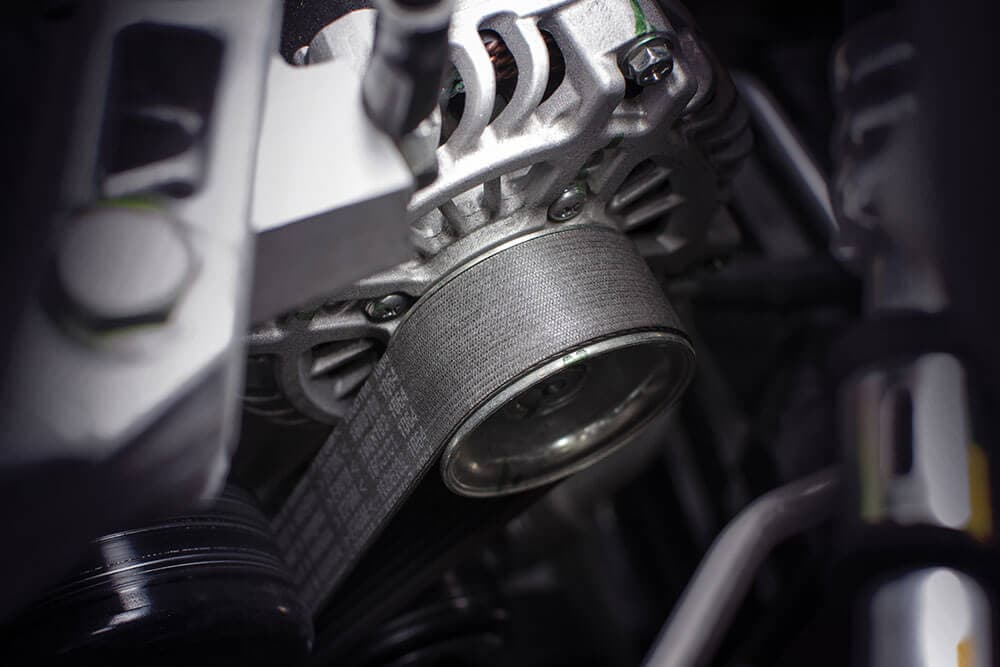
Aftermarket and remanufactured alternators can vary considerably in quality. A replacement part may physically fit the vehicle and appear to work correctly at first but still have internal components or electronics that don't perform reliably under real-world conditions.
Modern charging systems can also be more sophisticated than older systems. The alternator works together with the battery, vehicle electronics, wiring, sensors, and engine-management system.
That makes accurate diagnosis especially important when an alternator fails repeatedly.
Installing alternator after alternator without determining why the failures are occurring can waste time and money without actually solving the problem.
The Resolution
After researching the repeated failures and finding reports of similar Nissan charging-system issues, we decided that continuing to install the same type of aftermarket replacement wasn't the right approach.
For this Murano, moving to a new genuine Nissan alternator was the solution we trusted.
An OEM alternator may cost more than some aftermarket alternatives, but when repeated replacement-part failures are involved, paying more for the correct high-quality component can ultimately be the less expensive and less frustrating option.
That doesn't mean every aftermarket alternator will fail or that every Nissan requires an OEM alternator. The vehicle should be properly diagnosed first, and the quality and source of the replacement component should be considered as part of the repair.
Diagnosing Nissan Alternator and Charging Problems
If your Nissan Murano or another Nissan is experiencing a battery warning light, multiple dashboard warning lights, a dead battery, intermittent electrical problems, or repeated alternator failures, don't assume that simply replacing the alternator again will solve the problem.
The battery, alternator output, wiring, connections, grounds, and charging-system controls should be tested to determine what's actually happening.
Primary Care Auto Repair in Warwick, RI, diagnoses charging-system problems and helps customers choose appropriate replacement components based on the vehicle and the repair.
Our goal is simple: help you drive a safe and reliable vehicle.