

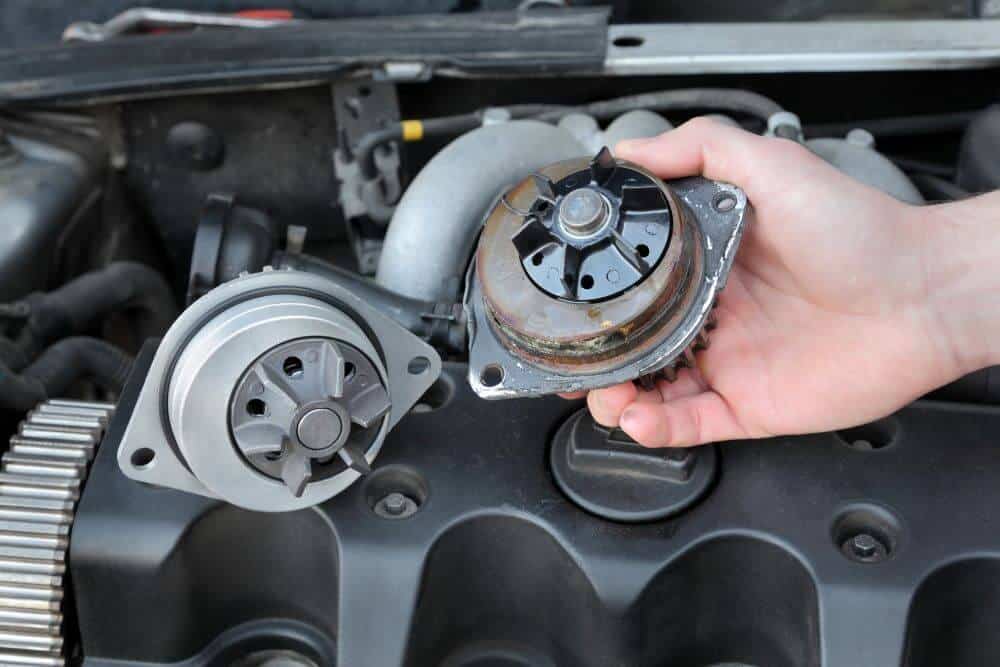
Your vehicle’s water pump plays a critical role in keeping the engine at a safe operating temperature. It circulates coolant through the engine and cooling system, allowing excess heat to be transferred away from the engine.
When a water pump begins to leak or fails to circulate coolant properly, engine temperature can rise quickly. Ignoring the warning signs can eventually lead to severe overheating and expensive engine damage.
Rust or Corrosion Around the Water Pump
Visible corrosion around the water pump can indicate that coolant has been leaking or seeping from the pump or a nearby cooling-system component.
As coolant escapes and dries, it may leave behind staining, crusty deposits, or corrosion around the pump.
If you notice these signs, have the cooling system inspected. Finding a small leak early can help prevent a larger coolant loss and an overheating problem later.
Leaking Coolant
A failing water pump can leak coolant from its seal, gasket, housing, or weep hole.
You may notice drops or a puddle underneath the front portion of the vehicle, although the exact location depends on the engine and water pump design.
Keep in mind that a coolant leak doesn't automatically mean the water pump has failed. Radiator hoses, the radiator, thermostat housing, coolant reservoir, fittings, and other cooling-system components can also leak.
The source of the leak should be identified before replacing parts.
Poor Coolant Circulation
A water pump doesn't have to leak externally to cause a problem.
Internal wear or damage can prevent the pump from circulating coolant effectively through the engine. Without adequate circulation, heat can't be transferred away from the engine efficiently and the temperature can begin to climb.
A circulation problem may become especially noticeable when driving under heavier loads or during extended operation.
Growling, Grinding, or Unusual Engine Noises
A worn water pump bearing can sometimes produce a growling, grinding, or rumbling sound from the front of the engine.
On vehicles where the water pump is driven by an accessory belt, problems with the belt, tensioner, or pulley can also create unusual noises and may affect water pump operation.
Other vehicles use a timing belt, timing chain, or electric water pump, so the exact symptoms and repair procedures vary considerably between vehicles.
Unusual noises from the front of the engine should be diagnosed rather than assuming the water pump is responsible.
Engine Overheating
Overheating is one of the most serious symptoms associated with a water pump or cooling-system problem.
If the pump cannot circulate enough coolant—or the system has lost coolant because of a leak—the engine may no longer be able to control its temperature.
If your temperature gauge moves into the hot range or you receive an overheating warning, don't continue driving the vehicle. Severe overheating can damage cylinder heads, head gaskets, and other major engine components.
Have Cooling System Problems Checked Early
Water pumps don't have one universal replacement interval. Their lifespan depends on the vehicle, water pump design, cooling-system condition, maintenance history, and other factors.
That's why it's better to respond to symptoms rather than assuming every water pump will last a specific number of years or miles.
Primary Care Auto Repair can inspect your vehicle’s water pump and cooling system, locate coolant leaks, and determine what's causing an overheating problem.
If you've noticed leaking coolant, unusual engine noises, rising engine temperature, or other cooling-system symptoms, schedule an appointment with Primary Care Auto Repair in Warwick, RI. We'll diagnose the problem and recommend the appropriate repair.