


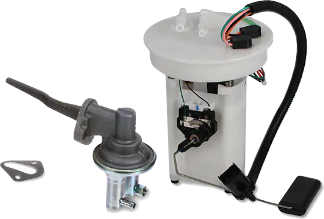
7 Signs Your Fuel Pump Is Going Out
Your vehicle’s fuel pump has a simple but critical job: it delivers fuel from the tank to the engine at the pressure and volume the engine needs to run properly.
When a fuel pump begins to fail, the symptoms aren’t always obvious. Your vehicle may still start and drive normally around town but struggle when the engine needs more fuel—such as during highway driving, acceleration, or climbing a hill. In other cases, the first obvious symptom may be a hard-starting or no-start condition.
Here are seven common warning signs that your fuel pump may be failing.
1. Engine Sputtering at Highway Speeds
If your engine begins to sputter, hesitate, or briefly lose power while you're driving at highway speeds, inadequate fuel delivery could be the cause.
At higher speeds and under heavier loads, your engine needs a steady supply of fuel. A weak fuel pump may not be able to maintain the required pressure or volume.
Sputtering can have other causes—including ignition, air-metering, or fuel-injector problems—so proper diagnosis is important before replacing the fuel pump.
2. Difficulty Starting the Engine
A weakening fuel pump may cause the engine to crank longer than usual before starting.
You might notice that the vehicle starts normally sometimes but requires several extra seconds of cranking at other times. This can happen when the fuel system isn't building or maintaining adequate pressure.
Hard starting can also be caused by the battery, starter, ignition system, sensors, or other fuel-system components, so this symptom alone doesn't confirm a bad fuel pump.
3. Low Fuel Pressure
Your engine is designed to operate within a specific fuel-pressure range. If the pump can't maintain that pressure, the engine may run poorly—or not run at all.
A technician can test fuel pressure and compare the results with the manufacturer's specifications. Depending on the vehicle, diagnosis may also involve checking electrical power and ground at the pump, fuel-pump control modules, relays, filters, and other components.
Testing matters because replacing a fuel pump without confirming the cause can become an expensive guess.
4. Loss of Power Under Load
Does your vehicle feel fine during normal driving but suddenly become sluggish when you accelerate, climb a steep hill, carry a heavy load, or merge onto the highway?
That can be a sign of insufficient fuel delivery.
When the engine is placed under greater load, it requires more fuel. A weakening pump may keep up during light driving but fail to deliver enough fuel when demand increases.
5. Engine Surging or Inconsistent Acceleration
Unexpected changes in engine performance or vehicle speed can sometimes be associated with a fuel-delivery problem.
You may feel the vehicle hesitate and then accelerate, or notice inconsistent power even though you're holding the accelerator steady.
Because surging can also be caused by sensors, ignition problems, transmission issues, air-intake problems, or electronic controls, it should be properly diagnosed rather than automatically blamed on the fuel pump.
6. Decreased Fuel Economy
A noticeable drop in gas mileage can indicate that something isn't operating efficiently.
The fuel pump itself isn't always the culprit. Fuel-pressure problems, leaking injectors, faulty sensors, ignition problems, tire pressure, driving conditions, and many other factors can affect fuel economy.
But if reduced fuel economy appears alongside hard starting, hesitation, sputtering, or loss of power, the fuel system deserves a closer look.
7. The Engine Cranks but Won't Start
A completely failed fuel pump can prevent the engine from starting.
The starter may crank the engine normally, but without adequate fuel delivery, combustion can't occur.
That doesn't automatically mean the fuel pump has failed. A no-start condition can also involve ignition, electrical power, security systems, sensors, fuel-pump relays or modules, wiring, or other components.
That's why testing the vehicle before replacing parts is so important.
Think Your Fuel Pump Is Failing?
If your vehicle is sputtering, difficult to start, losing power, or showing other signs of a fuel-delivery problem, Primary Care Auto Repair can diagnose the cause before parts are replaced unnecessarily.
Our technicians can inspect and test the fuel system to determine whether the problem is the fuel pump or something else affecting engine performance.
Schedule service with Primary Care Auto Repair in Warwick, Rhode Island, and we'll help get to the bottom of it.